Chicken Mash
Chicken Mash: The Complete Guide to Types, Benefits, Feeding, Prices & Best Practices
Chicken mash is the backbone of successful poultry farming. Whether you are a small-scale farmer keeping a few birds at home or a commercial poultry producer managing thousands of chickens, the quality of feed you use determines growth rate, health, egg production, and overall profitability. Among all poultry feeds, chicken mash remains one of the most widely used and trusted options due to its nutritional balance, affordability, and ease of feeding.
https://afrimachfeeds.com/storage/media/JS1NeqvS35AUQ7HbcWvwDZ4iq1ooWOrq4deKAiMZ.jpg
At Afrimach Feeds, we understand the critical role nutrition plays in poultry farming. Our chicken mash products are formulated to meet the nutritional needs of birds at every stage of life, ensuring farmers achieve consistent results and maximum returns.
This comprehensive guide explains everything you need to know about chicken mash — from what it is, the different types available, nutritional composition, feeding guidelines, benefits, pricing, and why Afrimach Feeds chicken mash stands out in the market.
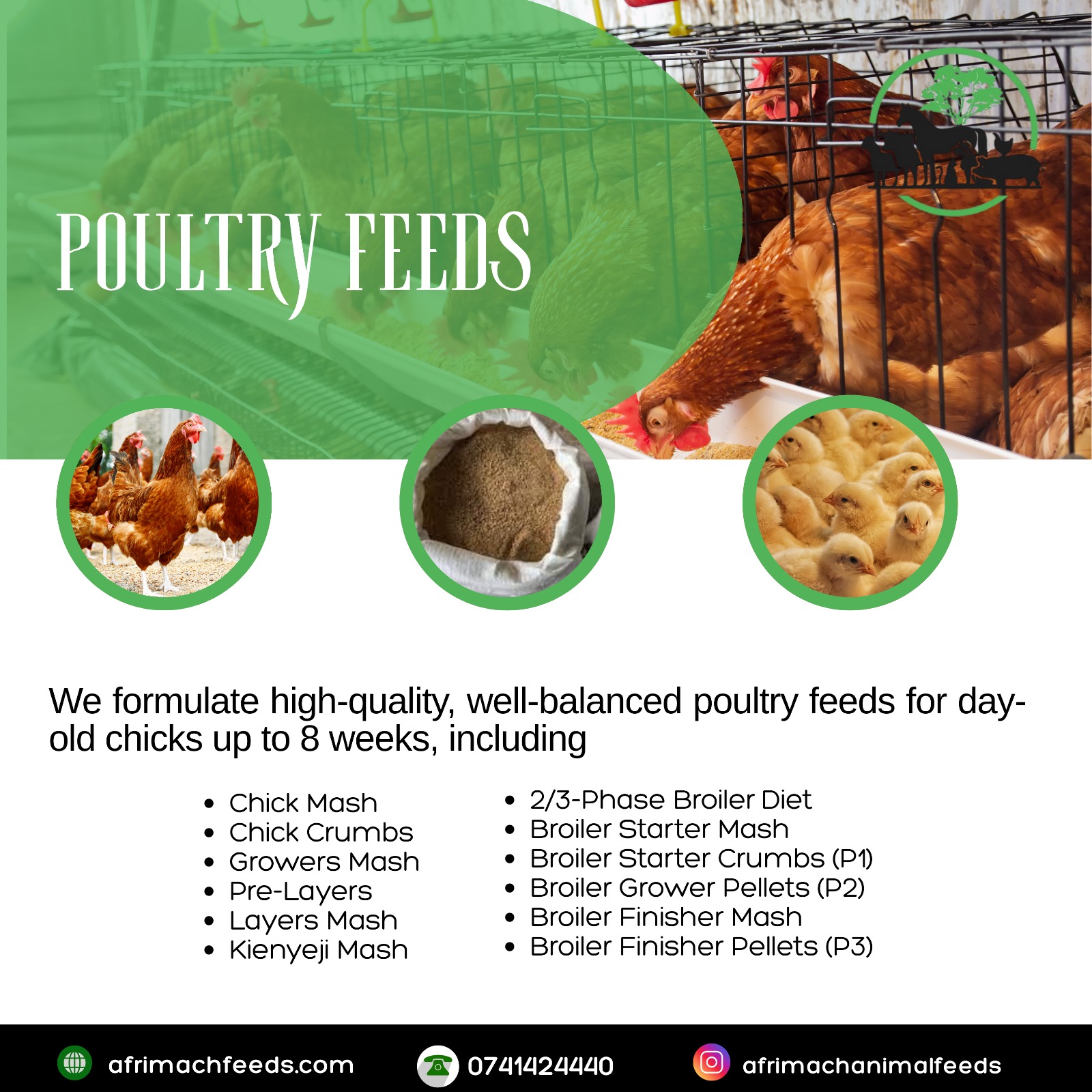
What Is Chicken Mash?
Chicken mash is a finely ground poultry feed made from a carefully selected blend of cereals, protein sources, minerals, vitamins, and essential additives. The feed is ground into a soft, powder-like form that chickens can easily eat and digest.
Unlike pellets, which are compacted, or crumbles, which are broken pellets, chicken mash is not processed into hard forms. This makes it suitable for birds of all ages, especially young chicks and indigenous breeds that prefer softer feeds.
Chicken mash is designed to:
-
Supply energy for daily activity
-
Provide protein for growth and egg formation
-
Strengthen bones and eggshells
-
Support immunity and overall bird health
Importance of Chicken Mash in Poultry Farming
Feed accounts for more than 60% of poultry production costs. Choosing the right chicken mash directly impacts farm efficiency and profitability. Poor-quality feed results in slow growth, weak birds, low egg production, and increased disease risk.
Quality chicken mash ensures:
-
Faster weight gain in growing birds
-
Consistent egg production in layers
-
Reduced feed wastage
-
Better feed conversion ratios
-
Healthier flocks with lower mortality
This is why experienced farmers prioritize feed quality over cheap alternatives.
Types of Chicken Mash
Chickens have different nutritional needs at different stages of growth. For this reason, chicken mash is formulated into specific types:
1. Chick Mash
Chick mash is designed for newly hatched chicks from day one up to 6–8 weeks of age.
Nutritional Features of Chick Mash
-
High protein content to support rapid growth
-
Energy-rich ingredients for active chicks
-
Vitamins and minerals for immune system development
-
Easily digestible formulation
Benefits of Using Quality Chick Mash
-
Strong early growth
-
Reduced chick mortality
-
Proper bone and feather development
-
Improved resistance to diseases
Afrimach Feeds chick mash is carefully formulated to give chicks the best possible start in life.
2. Growers Mash
Growers mash is fed to chickens from approximately 8 weeks until they reach maturity or point of lay.
Role of Growers Mash
-
Builds muscle and body frame
-
Prepares pullets for egg production
-
Prevents excessive fat accumulation
Growers mash contains moderate protein levels and balanced energy to ensure birds grow steadily without becoming overweight.
Afrimach Feeds growers mash helps farmers raise strong, well-developed birds ready for the next production stage.
3. Layers Mash
Layers mash is fed to chickens from the point they start laying eggs and throughout the laying period.
Key Components of Layers Mash
-
High calcium levels for strong eggshells
-
Balanced protein for continuous egg production
-
Minerals and vitamins for bird health
Feeding quality layers mash results in:
-
Higher egg production
-
Stronger eggshells
-
Better egg size and quality
Afrimach Feeds layers mash supports consistent egg production and longer laying cycles.
Nutritional Composition of Chicken Mash
A well-formulated chicken mash contains the following components:
1. Energy Sources
Energy is supplied through ingredients such as maize, wheat by-products, or other cereals. Energy fuels growth, movement, and egg production.
2. Protein Sources
Proteins are essential for muscle development, feather growth, and egg formation. Sources may include oilseed meals, legumes, or other plant-based proteins.
3. Vitamins
Vitamins support immunity, metabolism, and overall health. Common vitamins included are A, D, E, and B-complex.
4. Minerals
Minerals such as calcium, phosphorus, and trace elements strengthen bones and eggshells and support metabolic functions.
5. Feed Additives
Additives improve digestibility, enhance nutrient absorption, and promote bird health.
Afrimach Feeds ensures all these nutrients are carefully balanced in every batch of chicken mash.
Chicken Mash Prices in Kenya
Chicken mash prices in Kenya depend on several factors:
-
Type of mash (chick, growers, or layers)
-
Quality of raw materials used
-
Bag size and packaging
-
Market and seasonal conditions
While prices may vary, it is important to remember that cheap feed is often expensive in the long run due to poor performance.
Afrimach Feeds offers competitively priced chicken mash that delivers consistent quality and measurable results. For current prices, farmers are encouraged to contact Afrimach Feeds directly or visit afrimachfeeds.com.
How to Feed Chicken Mash Correctly
Proper feeding practices are essential to maximize the benefits of chicken mash.
General Feeding Guidelines
-
Provide clean, fresh drinking water at all times
-
Feed birds according to their age and production stage
-
Avoid sudden feed changes
-
Store feed in a dry, cool place
-
Protect feed from pests and moisture
Feeding Frequency
-
Chicks: Feed small amounts frequently
-
Growers: Feed twice daily or free-choice
-
Layers: Feed consistently to support egg production
Common Mistakes When Feeding Chicken Mash
Many farmers unknowingly reduce productivity through poor feeding practices.
Common Errors Include:
-
Feeding the wrong mash type
-
Mixing feeds without proper formulation
-
Using moldy or contaminated feed
-
Inconsistent feeding schedules
-
Poor storage conditions
Avoiding these mistakes helps improve bird health and farm profits.
Chicken Mash vs Pellets vs Crumbles
Understanding feed types helps farmers make informed decisions.
| Feed Type | Description | Best For |
|---|---|---|
| Mash | Finely ground feed | All ages, especially chicks |
| Pellets | Compressed feed | Layers and broilers |
| Crumbles | Broken pellets | Young chicks |
Chicken mash remains popular due to its affordability, flexibility, and ease of digestion.
Why Afrimach Feeds Chicken Mash Is Trusted by Farmers
Afrimach Feeds is committed to supporting poultry farmers with reliable nutrition solutions.
Our Chicken Mash Is:
-
Easy to use and highly digestible
-
Formulated with essential nutrients including vitamins and minerals
-
Produced under strict quality control
-
Suitable for commercial and small-scale farmers
We focus on consistency, performance, and farmer success.
Role of Chicken Mash in Profitable Poultry Farming
Feeding quality chicken mash contributes to:
-
Faster growth rates
-
Reduced mortality
-
Higher egg yields
-
Better feed efficiency
-
Increased farm profitability
Farmers who invest in proper nutrition enjoy long-term success and sustainable production.
Frequently Asked Questions About Chicken Mash
Is chicken mash suitable for indigenous chickens?
Yes. Chicken mash is ideal for indigenous and improved breeds when fed correctly.
Can chicken mash be fed alone?
Yes. A well-formulated chicken mash provides all essential nutrients.
When should I change from growers mash to layers mash?
At the point of lay or when birds are about to start laying eggs.
Chicken Mash in Kenya
Chicken mash is more than just feed — it is the foundation of healthy birds and profitable poultry farming. Choosing the right type of chicken mash and feeding it correctly ensures strong growth, high egg production, and reduced losses.
At Afrimach Feeds, we are dedicated to providing high-quality chicken mash that farmers can trust. Visit afrimachfeeds.com today to learn more about our poultry feed products and take your poultry farming to the next level.
