Cow Bloat Treatment in Kenya: Signs, First Aid and Prevention
Cow bloat treatment is one of the most urgent topics for dairy and beef farmers because a bloated cow can move from mild discomfort to a life-threatening emergency very quickly. Bloat happens when gas builds up in the rumen and the animal cannot release it normally through belching.
For farmers in Kenya, bloat is often seen after sudden feed changes, lush pasture, wet legumes, too much finely ground feed, or poor roughage balance. This guide explains the signs, first steps, prevention, and feeding practices that can reduce the risk of bloat in cattle.
Important: Severe bloat is an emergency. If the cow is struggling to breathe, cannot stand well, has a very swollen left side, or looks distressed, call a qualified veterinary officer immediately. Do not delay treatment while trying home remedies.
What Is Bloat in Cows?
Bloat in cows is the overfilling of the rumen with gas. The rumen is the large fermentation chamber on the left side of a cow. During normal digestion, gas is produced and released through belching. When the gas is trapped, pressure builds up and the left side of the abdomen becomes swollen.
There are two main types of cattle bloat:
- Frothy bloat: Gas is trapped in a stable foam inside the rumen. This is common when cattle graze lush legumes or consume feeds that foam easily.
- Free-gas bloat: Gas collects separately but cannot escape, often because of blockage, choking, poor rumen movement, or an animal lying in a position that prevents normal gas release.
Signs of Bloat in Cattle
Early recognition is very important. A cow with bloat may show:
- Swelling high on the left side of the abdomen
- Restlessness, kicking at the belly, or repeated lying down and standing up
- Reduced appetite or stopping feeding completely
- Difficulty breathing, open-mouth breathing, or grunting
- Drooling or signs of choking
- Stiff movement or discomfort when walking
- Collapse in severe cases
If the swelling is increasing quickly, treat it as an emergency and call a vet.
What Causes Bloat in Cows?
Bloat can be caused by feeding, grazing, disease, or management issues. Common causes include:
- Sudden access to lush green pasture, especially legumes
- Letting hungry cattle graze wet pasture in the morning
- Changing from roughage to high-concentrate feed too quickly
- Very finely ground feeds that ferment rapidly
- Low-fibre diets that reduce rumen movement
- Choking or obstruction in the oesophagus
- Weak or sick animals with poor rumen function
First Aid for Cow Bloat
The right action depends on how severe the bloat is. Use these steps while arranging veterinary help.
1. Remove the Cow From Risky Feed
Move the animal away from lush pasture, fresh legumes, or suspect feed. Keep the cow calm and avoid forcing it to run.
2. Keep the Animal Standing and Walking Slowly
If the cow can stand, gentle walking may help rumen movement. Do not exhaust the animal, especially if breathing is difficult.
3. Call a Veterinary Officer Immediately for Severe Cases
A vet may pass a stomach tube, give an anti-foaming product, or perform emergency gas release in life-threatening cases. These procedures should be handled by trained personnel because wrong handling can injure the cow.
4. Do Not Rely on Random Home Remedies
Some farmers use oils or other local mixtures, but the wrong dose or wrong method can worsen the situation. Frothy bloat and free-gas bloat are treated differently, so proper diagnosis matters.
Cow Bloat Treatment Options
According to veterinary guidance, frothy bloat is commonly treated using anti-foaming agents given into the rumen, while free-gas bloat is relieved by removing the trapped gas and correcting the cause of blockage or poor gas release.
In practice, treatment may include:
- Passing a stomach tube to release gas
- Administering an anti-foaming agent for frothy bloat
- Removing an oesophageal obstruction if choking is involved
- Emergency rumen puncture or surgery in severe cases
- Follow-up diet correction to prevent recurrence
Because bloat can kill quickly, treatment should not be delayed when signs are severe.
How Feeding Can Help Prevent Bloat
Good feeding management is the best long-term prevention. Many bloat cases are linked to sudden feed changes or poor roughage balance.
- Introduce new feeds gradually over several days.
- Do not let very hungry cows enter lush pasture.
- Provide dry roughage before grazing high-risk pasture.
- Avoid sudden jumps in concentrates or finely ground feeds.
- Keep enough fibre in the ration to support rumen movement.
- Use consistent, quality cattle feeds from a reliable supplier.
- Watch animals closely after changing feeds or pasture.
For dairy cows, balanced feeding also supports milk production, body condition, and rumen health. If you are comparing feeds, see our guide on best dairy meal in Kenya and our livestock feed page at livestock feeds in Kenya.
Best Feeding Practices for Dairy Cows in Kenya
Dairy cows need enough energy, protein, minerals, and roughage. Poor-quality feed can reduce production and increase digestive problems. A good cattle-feeding plan should include:
- Quality roughage such as hay, silage, or fodder
- Balanced dairy meal based on production level
- Clean water available throughout the day
- Minerals and supplements where needed
- Gradual ration changes after calving, illness, or pasture changes
If your cows often bloat after feeding, the issue may be the ration, feed texture, sudden changes, or grazing management. A vet or animal nutrition advisor can help you identify the cause.
When Should You Call a Vet?
Call a vet immediately if:
- The left side of the cow is very swollen
- The cow is breathing heavily or grunting
- The cow cannot stand or is collapsing
- You suspect choking
- The swelling keeps increasing
- The animal has repeated bloat episodes
Fast professional help can save the cow and prevent losses.
Frequently Asked Questions About Cow Bloat
What is the fastest treatment for cow bloat?
The fastest treatment depends on the type of bloat. Free-gas bloat may need gas release using a stomach tube, while frothy bloat may need an anti-foaming agent. Severe cases need urgent veterinary attention.
Can cattle bloat go away on its own?
Mild cases may improve, but farmers should not wait when swelling is obvious or breathing is affected. Bloat can become fatal quickly.
What feeds cause bloat in cows?
Lush legumes, sudden high-concentrate feeding, finely ground feeds, and low-fibre diets can increase bloat risk. The bigger problem is often sudden change, not one feed alone.
How can I prevent bloat in dairy cows?
Feed enough roughage, introduce new feeds slowly, avoid putting hungry cows on wet lush pasture, and use balanced dairy feeds. Regular observation after feeding changes is also important.
Order Quality Cattle Feeds in Kenya
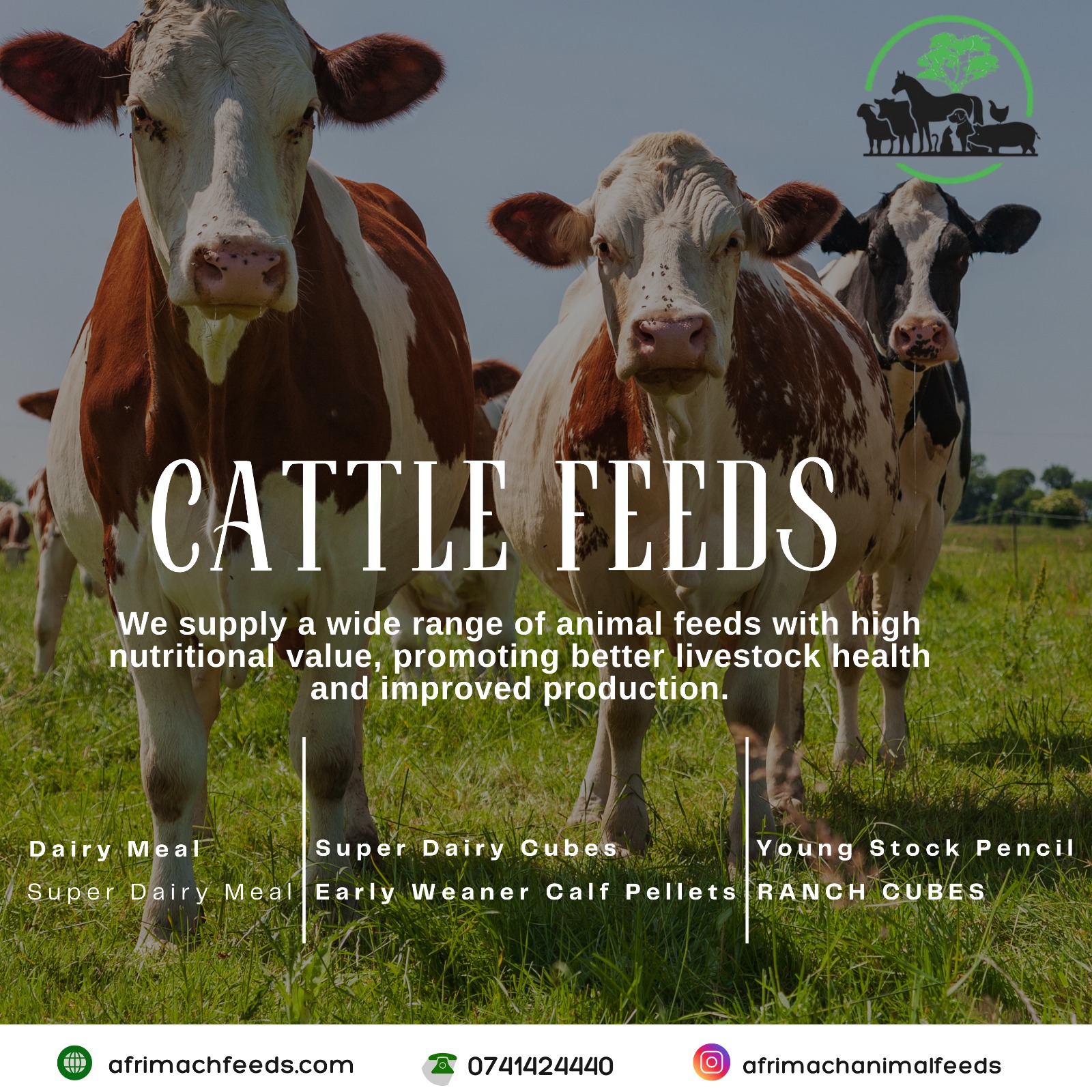
Afri Mach Feeds supplies cattle feeds, dairy feeds, supplements, poultry feeds, pig feeds, and other livestock feeds in Kenya. If you are not sure which feed is right for your animals, contact us with your animal type, age, number of animals, production level, and location.
View animal feeds or contact Afri Mach Feeds for help choosing the right feed for your farm.
References
Bloat In Cattle: Signs, Care, and Prevention
Responding to Farmers’ Questions
Many livestock keepers want to know: “How can I recognize and treat bloat in my cows?” Bloat is a condition in which gas accumulates in the rumen (the first stomach compartment) faster than the cow can release it. This can cause severe discomfort, reduce productivity, and in extreme cases, lead to death if not treated promptly. Bloat is especially common in cows grazing on lush pastures, particularly legumes like clover, alfalfa, or young grass, and in cows fed high-concentrate diets.
The condition develops when excessive gas is produced during fermentation or when frothy foam traps the gas, preventing normal belching. Bloat can escalate rapidly, so early recognition and immediate intervention are critical to save affected animals and prevent herd losses.
Symptoms of Bloat in Cows
Farmers should look for these signs:
-
Swelling of the left side of the abdomen, especially behind the ribs
-
Distended, tight belly that may feel hard to touch
-
Restlessness, discomfort, or kicking at the belly
-
Difficulty breathing due to pressure on the diaphragm
-
Loss of appetite and decreased milk production
-
Excessive salivation or drooling
Treatment of Bloat in Cows
-
Immediate intervention: For mild cases, walking the cow and massaging the rumen can help release gas
-
Rumen-tube insertion: Used by a veterinarian to relieve trapped gas
-
Anti-foaming agents: Products like poloxalene or mineral oil to reduce frothy bloat
-
Diet adjustment: Introduce lush pastures gradually and avoid sudden feed changes
-
Emergency care: In severe cases, veterinary surgical intervention may be required
Prevention and Farmer Tips
-
Mix high-risk pastures with grasses to reduce risk
-
Provide dry roughage alongside legumes or lush feed
-
Introduce concentrates gradually to prevent digestive upsets
-
Monitor cows closely during early grazing seasons or after feed changes
-
Keep emergency anti-bloat products on hand for quick response
Bloat can become life-threatening within hours. Observing early signs, acting promptly, and consulting a veterinarian for severe cases are essential. Careful feeding management, gradual diet changes, and daily monitoring will largely prevent bloat, keeping cows healthy, productive, and safe.
